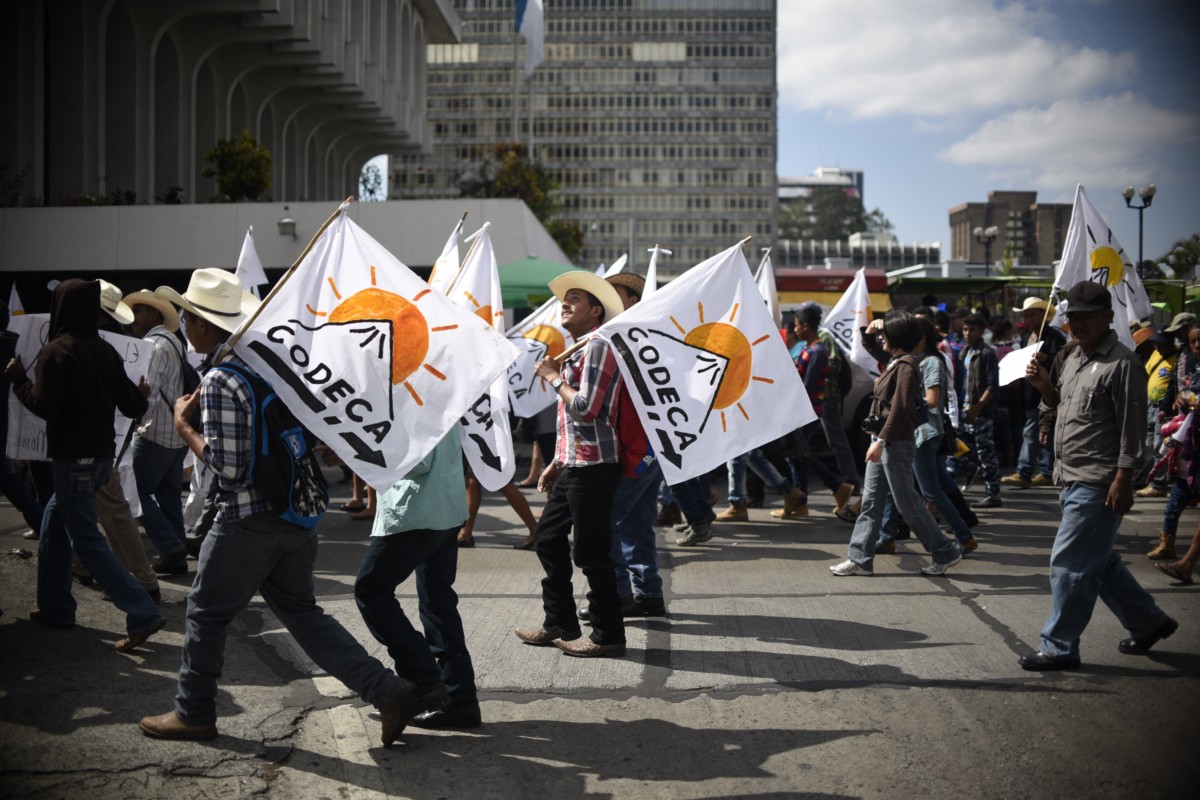
Follow Jeff Abbot he is based in Guatemala and is a reliable source
https://truthout.org/articles/assassinations-of-indigenous-leaders-in-guatemala-trigger-fear/

Over coffee one day, Richey described his vision of King County owning a leadership role on this issue. He was working on an “end demand” program, a de facto decriminalization of sex workers paired with a targeting of sex buyers.
This quasi “Nordic Model” is a marked improvement from the traditional American approach to prostitution and lies roughly in the middle of the political spectrum of sex work. However, its efficacy relies not only on prosecutorial and law enforcement changes, but also on a strong social services safety net; something that the King County region is still building.Read full article here:
Over in the Sheriff’s office, things had shifted too. Both the Prosecutor and the Sheriff were now saying “we’re not going to arrest our way out of this.”
The fight over the safety net program of SNAP has really dominated the discussion, even justifiably. And it’s also the biggest expenditure under this bill, by a huge margin; it’s like 75 to 80 percent of the spending. But lots and lots and lots of things that impact the way our food system operates come from the Farm Bill. I think if you’re not involved in farming, people don’t realize the extent to which the government is involved in this industry, in this marketplace.



In an unprecedented move, the entire police force of a Michoacan municipality is arrested with links to a mayoral candidature killing.
With the lates killings the number of Mexican political candidates and pre-candidates murdered since September 2017 to 121, making this the most violent electoral cycle in the country's history.https://readersupportednews.org/news-section2/318-66/50839-mexican-police-force-arrested-links-to-candidate-killing
While Mexican governmental institutions are experiencing a credibility crisis, Mexico’s National Congress approved what is known as the Internal Security Law. According to Article 2 of the text of the law, its objective is “to safeguard the permanence and continuity of governmental order and institutions, as well as national development through the maintenance of constitutional order, the rule of law and democratic governance.”
Mexican President Enrique Peña Nieto enacted the law, which became effective on December 21, 2017, and has since caused a wave of protests throughout Mexico. Numerous social movements, unions and civil society organizations see the new law as part of a process of militarizing Mexican society, which could worsen violence in the county.
In general terms, this law broadens opportunities for the armed forces to act throughout Mexican territory, even legitimizing the use of violence. It allows the armed forces to intervene in matters that concern civil authorities, such as disturbances and protests that are considered violent or acts of resistance. The law also permits the invasion of citizens’ privacy to collect intelligence information and entry into homes without a court order, including during criminal legal system investigations.
Anneliese Danaé Echeverria, an attorney and professor who is a union member and legal affairs assistant with Section 22 of the National Organization of Education Workers (CNTE) in the state of Oaxaca, tells Truthout, “The Mexican Constitution established that the army could not intervene in civil matters, they had to resolve any conflicts through the military court system. Civilians have their own courts. But the new law guarantees military intervention in all aspects of civilian life throughout the country. Civil authorities that are already in crisis will have little room to interfere with these interventions, because the military will act immediately, without consultation or requesting a warrant.”

